DEEN
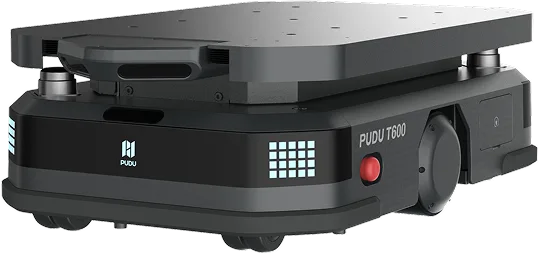
Autonomous material transport for production, warehousing and intralogistics: the structurally identical AMRs take over recurring routes between warehouse, line and dispatch – with 150 kg (T150) or 300 kg (T300) payload and interchangeable top modules, from open trays to a towing hook.

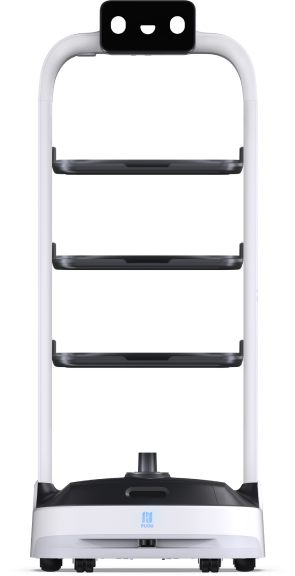
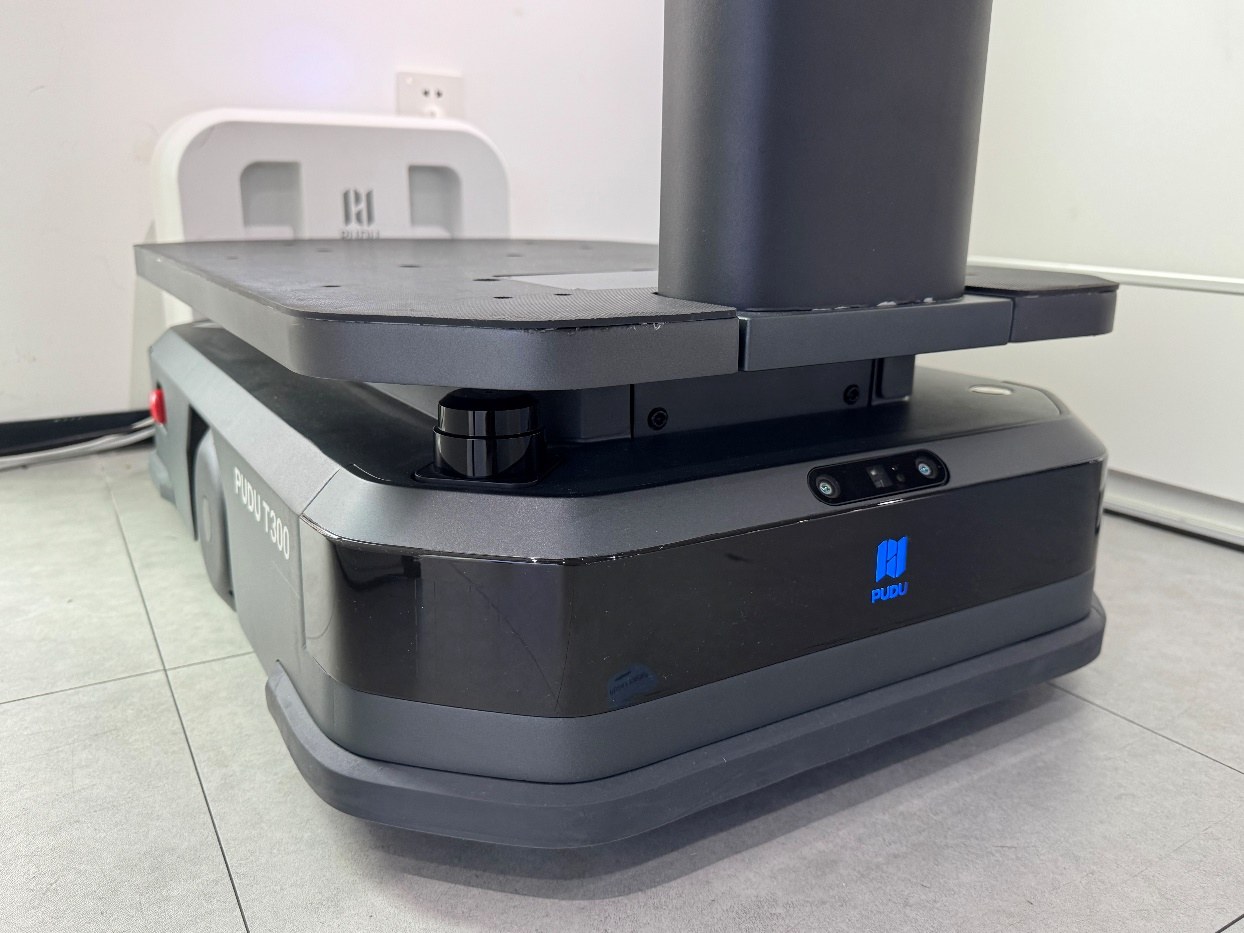
The T150 and T300 share the same compact chassis (835 × 500 mm footprint) and differ in payload. Interchangeable top modules adapt the robot to your process – not the other way round: open trays for small parts, a rack module for order picking, a lifting module for picking up load carriers, or towing mode for trolleys.


No magnetic strips or floor markers: using PUDU VSLAM+ and LiDAR SLAM, the robot maps the facility itself and adapts to layout changes without the plant having to be modified. The safety package is designed for industrial environments and complies with ISO 3691-4.
With 12 hours of runtime unloaded, 2-hour fast charging and a swappable battery, the T series covers multi-shift operation too. Operation takes place directly on the robot, via pager or through the Pudu Link app – and via IoT modules, salesmotion provides the technical integration of gates and lifts.
Both models are structurally identical and travel the same routes. What matters is the weight and type of your transports – we determine that in the site assessment.
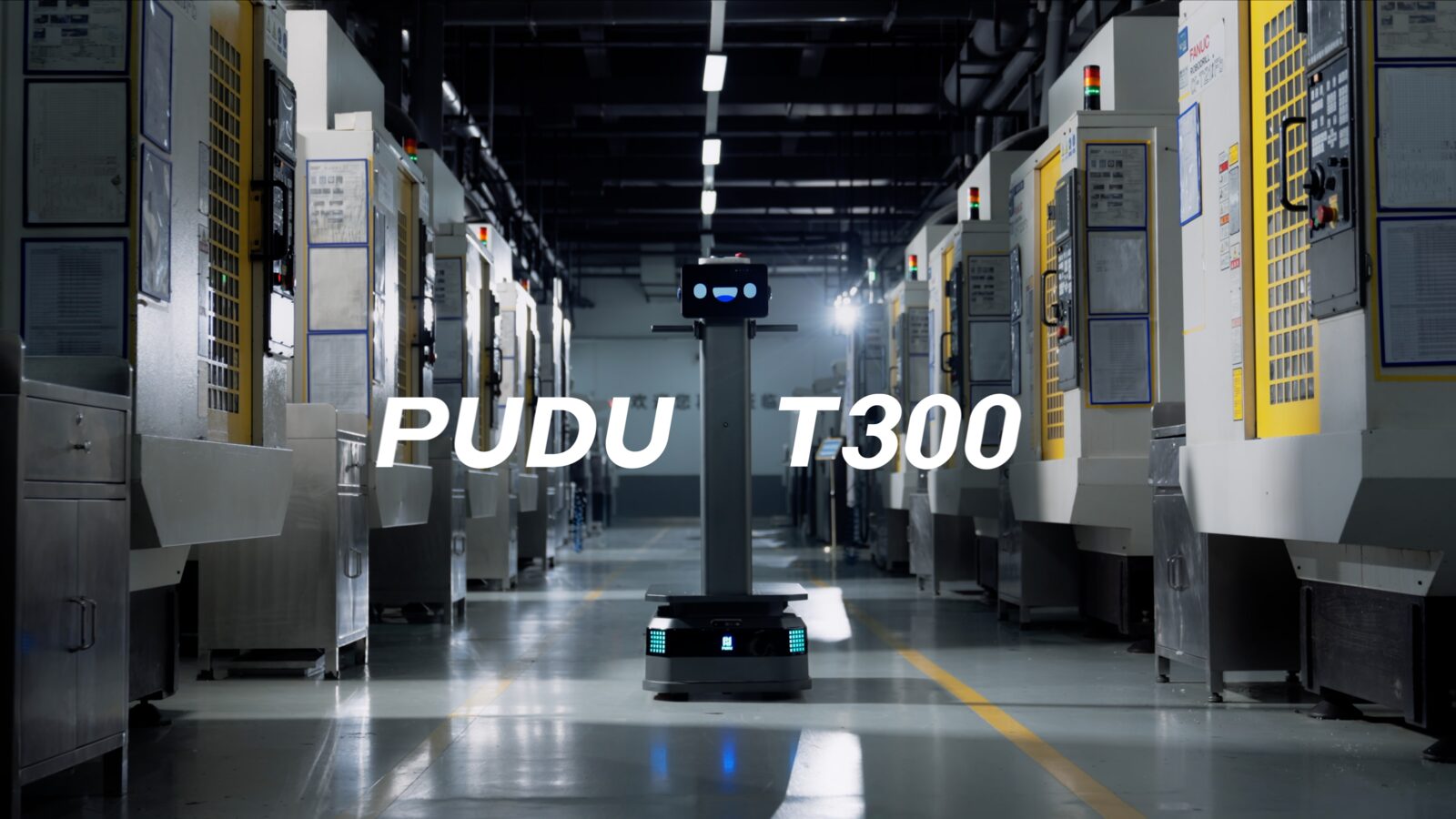
Line supply, material replenishment and removal of finished parts – recurring routes between stations run automatically.
Transport between picking, packing station and goods-out – fewer empty runs, a predictable material flow and safe travel even in narrow aisles.
Laundry, consumables and internal errands in hospitals, care facilities and large sites – across floors too, via lift integration.
Fully integrated from day one: site assessment, set-up, connection of gates and lifts – and, in day-to-day operation, remote monitoring and technician call-outs from a single source.
We check routes, passageways, thresholds and frequencies on site and determine which model and which top module fit your process.
Mapping, definition of stations and routes, training for your team – on site by our own staff.
Where the material flow leads through doors and across floors, we provide the technical integration of the systems via IoT modules.
Our team monitors device status and alerts remotely and steps in before a fault slows down your operation.
Support via WhatsApp, phone and e-mail – short paths instead of ticket loops.
DACH-wide technician network and remote support for maintenance and repairs during ongoing operation.
The Pudu T150 and T300 are autonomous mobile robots (AMRs) for in-house material transport. Built on the same compact chassis, they take over recurring routes between warehouse, production line and dispatch – the T150 with up to 150 kg, the T300 with up to 300 kg payload. Both navigate marker-free using a combination of visual and LiDAR-based SLAM navigation, detect low and overhanging obstacles and observe yellow safety lines on the shop floor. With a minimum passage width of 60 cm, they also cope with narrow areas shared with people.
salesmotion does not deliver the T series as an out-of-the-box device, but as a fully integrated solution: we analyse your material flow on site, select the model and top module, set up maps, stations and routes and provide the technical integration of gates and lifts. In day-to-day operation, our team monitors the robots remotely; for maintenance and repairs, our DACH-wide technician network is on hand.
The payload: the T150 carries up to 150 kg and is available as a Standard and as a Lifting variant with 60 mm lifting height, which allows it to pick up load carriers autonomously. The T300 carries up to 300 kg and supports four top-module modes – standard, rack, lifting and towing mode for carts and trolleys. Dimensions, navigation, battery and driving behaviour are identical; both models can therefore be combined in one fleet and travel in convoy in follow mode.
No. The T series navigates without magnetic strips, rails or floor markers. During set-up the environment is mapped; if the production layout changes, we adapt the map without any structural work being required. The robot clears thresholds up to 20 mm and gaps up to 35 mm on its own – making lift transitions feasible too. The prerequisite is an indoor area with level flooring and temperatures between 0 and 40 °C.
The T series complies with ISO 3691-4, the safety standard for driverless industrial trucks, and carries industrial CE certification. LiDAR sensors, depth cameras, collision sensors and emergency-stop buttons are part of the equipment; status lights, direction indicators and acoustic signals make the robot's behaviour transparent to employees at all times. As part of the site assessment, we jointly define traffic rules, priority zones and speed zones.
salesmotion offers the T series with flexible models – from purchase and leasing through to rental. Instead of blanket promises, we work with a conservative cost-effectiveness assessment for your operation: route lengths, frequencies and staff costs are factored in, and we show transparently at what point the deployment pays off. Before you decide, we can arrange a demonstration directly on your premises.
The cameras are used exclusively for navigation and obstacle avoidance; processing complies with the GDPR. On request, we provide your IT department and works council with the full documentation.
Site assessment and on-site demonstration – free of charge and without obligation.
What is it about?
So your enquiry reaches the right team straight away.
Interested in a productEnquiry in under a minute – reply within one working day Book a consultationPick a slot directly in the calendar Support for my machineVia WhatsApp to our support team